


A knocking sound when driving over bumps does not always mean the shock absorber has failed. Sometimes the problem is higher up, where the strut assembly attaches to the vehicle body. That connection is the strut mount.
Although it is easy to overlook, the mount plays a part in how the car feels and sounds on the road. Here is what it does, how to recognize possible wear, and what to check before ordering a replacement.
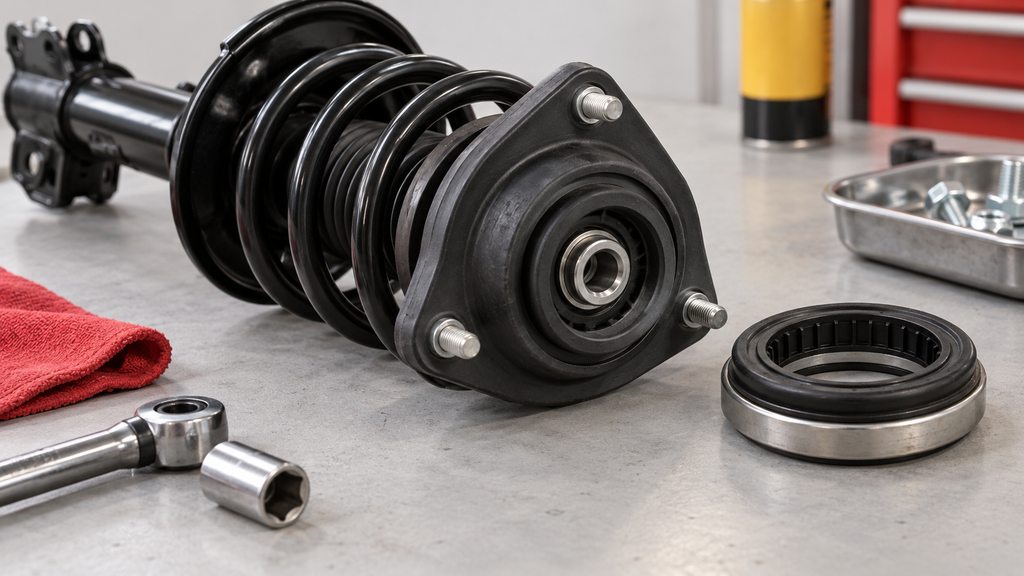
What does a strut mount do?
A strut mount secures the upper end of a strut assembly to the vehicle body. Its rubber section helps reduce the vibration and noise transferred into the cabin. Some front strut mount designs also include a bearing that allows the strut to rotate during steering.
Designs vary by vehicle. A mount with an integrated bearing, for example, is not interchangeable with a mount that uses a separate bearing simply because the two look similar in a product photo.
What are the signs of a worn strut mount?
A damaged or worn mount may be associated with:
- Knocking or clunking when driving over bumps
- Noise when turning the steering wheel
- Increased vibration felt inside the vehicle
- Visible cracks or separation in the mount’s rubber
- Rough or uneven steering feel, particularly if the bearing is affected
These symptoms do not confirm that the strut mount is the cause. Shock absorbers, ball joints, bushings and other suspension parts can produce similar complaints. A mechanic should inspect the assembly before replacing parts.
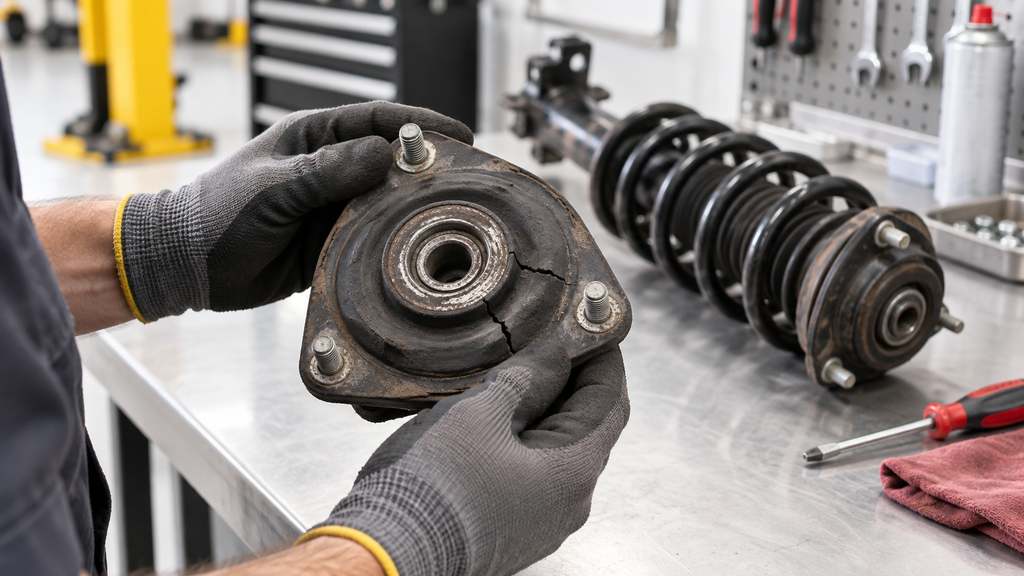
Should the strut mount be replaced with the shock absorber?
When a strut assembly is already being removed, it makes sense to inspect the mount and bearing closely. If the rubber is cracked, the bearing feels rough, or the mount is noisy or loose, replacing it during the same repair may avoid repeating the labor later.
There is no single replacement interval that applies to every strut mount. Its condition depends on the vehicle, road use and the design of the part.
How do you choose the correct strut mount?
For a repair shop or parts buyer, fitment is more useful than a visual match. Before ordering, check:
- OE number: Use the original part number as a starting reference.
- Vehicle details: Confirm the make, model, year and, when possible, chassis code or VIN.
- Mounting position: Check front or rear, plus left or right where specified.
- Bearing and hardware: Confirm exactly what is included with the mount.
- Product dimensions: If the application is uncertain, compare key mounting dimensions with the original part.
The same vehicle name can cover different production years and suspension configurations. Confirming these details before purchase helps prevent incorrect orders and returns.
What should wholesale buyers ask a supplier?
If you are sourcing strut mounts for an aftermarket catalog, send your supplier a list of OE numbers and the vehicle applications you need. Ask them to confirm the supplied components, packaging options, minimum order quantity and current lead time for each reference.
It is also useful to request clear photos of the actual part, including the mounting side and bearing area. These details make it easier to review fitment and prepare accurate product listings for your customers.
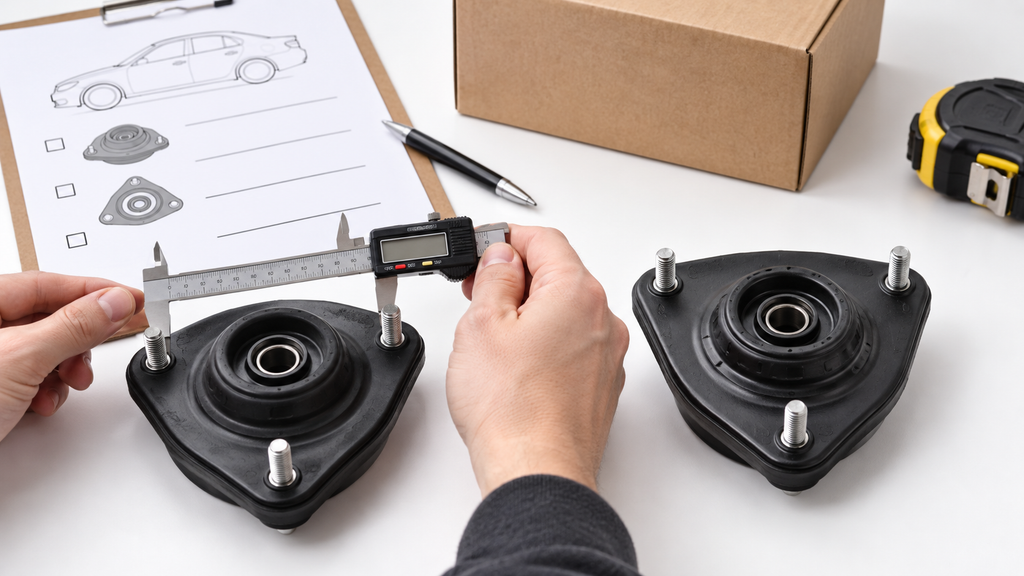
Looking for strut mounts for your parts range?
TOPSHINE supplies strut mounts alongside other automotive rubber and suspension parts. If you are buying for distribution, retail or repair supply, send us your OE numbers, vehicle applications, estimated quantities and destination market. We can check the relevant products and provide a quotation.
Contact: TOPSHINE Auto Parts
Email: sales@topshineparts.com