


In the realm of automotive chassis engineering, Mazda has earned global acclaim for its “Jinba Ittai” (Horse and Rider as One) driving experience. Whether it is the corner-carving Mazda 3 and MX-5 or the family-oriented yet agile CX-5 and CX-9, their precise steering response and solid road feedback rely heavily on a core suspension component: the lower control arm.
This article provides a comprehensive analysis of this critical chassis component, covering four key aspects: its structural function, common signs of failure, the technical characteristics specific to Mazda models, and recommendations for purchase and maintenance.
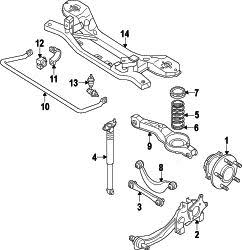
I. The Core Role of the Control Arm in Mazda Suspension Systems
The control arm is a hinged suspension component connecting the wheel to the vehicle body (or subframe). It plays a pivotal role in Mazda’s MacPherson strut and double-wishbone suspension architectures:
Guidance and Positioning: It constrains the wheel’s movement trajectory, ensuring that parameters such as camber and caster remain within factory specifications during vehicle operation.
Force and Torque Transmission: It withstands and transfers driving forces during acceleration, longitudinal forces during braking, and lateral shear forces during high-speed cornering.
Vibration Filtering (NVH Control): Through integrated high-performance rubber bushings, it absorbs road bumps and fine vibrations, thereby enhancing overall ride comfort and cabin quietness.
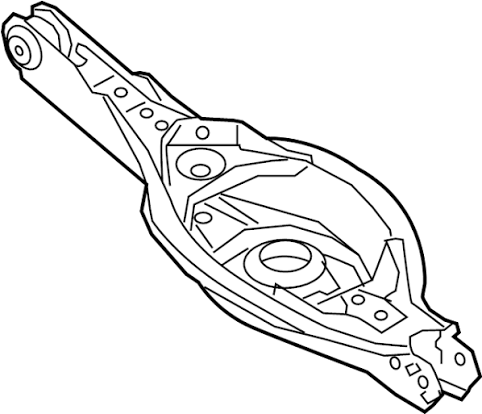
II. Technical Evolution and Characteristics of Mazda Control Arms
As Mazda’s technology has evolved, the materials and structural designs of its control arms have undergone significant changes:
- Classic Platforms (e.g., Mazda 3 BK/BL, Mazda 6 GG/GH)
Structural Materials: Predominantly utilized high-strength stamped steel or cast iron, featuring separately replaceable metal ball joints and bushings.
Characteristics: Robust and durable construction, though relatively heavy (resulting in higher unsprung mass).
- SkyActiv Platforms (SkyActiv Era: Mazda 3 BM/BP, CX-5, CX-9, etc.)
Lightweight Design: Extensive use of forged high-strength aluminum alloy or cold-stamped lightweight steel with optimized geometry; this significantly reduces unsprung weight, enabling faster wheel response to road irregularities.
Integrated Hydraulic Bushings: Certain rear bushings utilize fluid-filled or multi-durometer composite designs; these maintain exceptional lateral stiffness while vastly improving the ability to absorb impacts from large bumps.
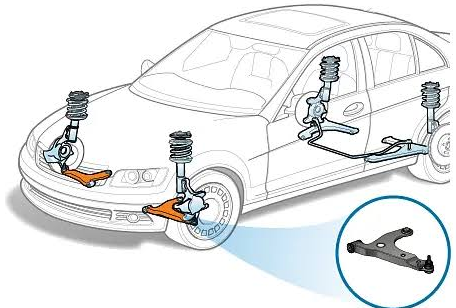
III. Common Symptoms of Mazda Control Arm Failure
Control arms are high-load, wear-prone components. After tens of thousands of kilometers of driving or prolonged exposure to harsh road conditions, the internal rubber bushings gradually age and crack, while ball joints develop play due to wear. Prompt inspection or replacement is recommended if the following symptoms occur:
Abnormal chassis noise: A metallic “creaking” or rubber-on-metal friction sound emanates from the front chassis when driving over speed bumps or potholes, or when steering (usually caused by aged bushings or dry-friction in ball joints).
Steering lag and looseness: Steering feels sluggish or imprecise during high-speed driving or lane changes; the vehicle loses the characteristic Mazda “point-and-go” responsiveness.
Abnormal tire wear: Deformed control arms or damaged bushings disrupt suspension geometry, causing uneven wear on the inner or outer edges of the tires.
Front-end shudder or pulling during braking: Under heavy braking, the front wheels shift slightly rearward, causing the vehicle to pull to one side or creating a sensation of the steering wheel tugging.
IV. Recommendations for Mazda Control Arm Replacement and Maintenance
- Complete assembly replacement vs. replacing only bushings/ball joints
Professional repair shops generally recommend replacing the entire control arm assembly.
Reason: Simply pressing in new bushings or ball joints is extremely labor-intensive (high labor costs), and the original metal arm body may already have fatigue micro-cracks or deformation. Replacing the pre-assembled unit ensures structural rigidity and saves significant labor time.
- Purchasing tips
Verify OE part numbers: Control arm specifications vary based on model year, engine displacement, and drivetrain (FWD vs. AWD)—for example, B45A-34-350E versus BBM2-34-350A. When purchasing, ensure an exact match using the VIN or OE interchange number. Prioritize anti-corrosion treatment: Opt for products that have undergone E-coating or anodizing; these treatments resist corrosion from road salt (de-icing agents) and marine salt spray, thereby extending the component’s service life. - Four-wheel alignment is mandatory after installation
Replacing control arms directly alters the front suspension geometry. Once installation is complete, a four-wheel alignment is essential to adjust toe and camber angles, restoring the Mazda’s optimal handling characteristics and protecting the tires.