


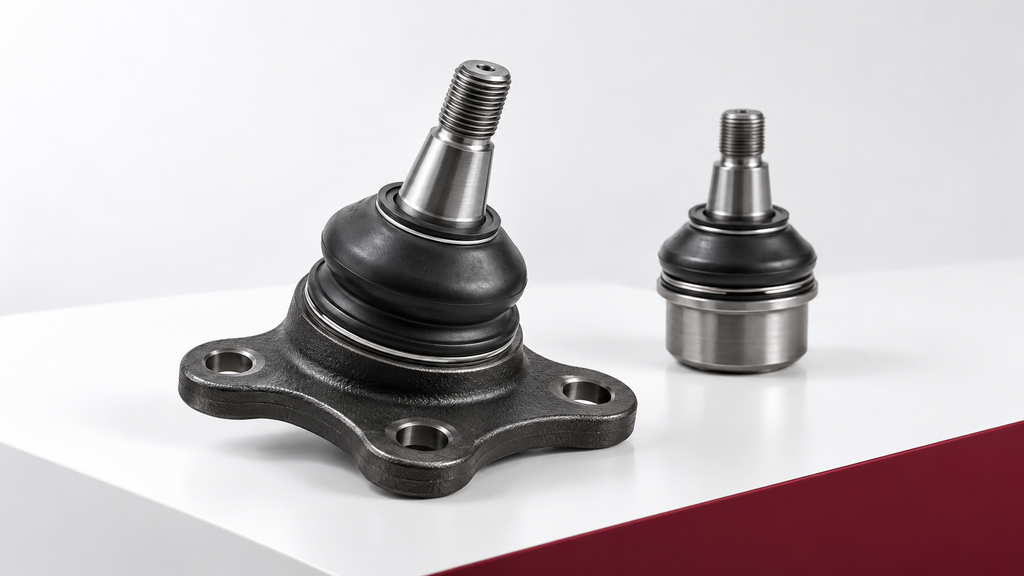
Illustrative ball joint designs. AI-generated cover image; not a photograph of a specific TopShine product.
Suspension ball joints are small components with an essential job: they let suspension links pivot as the wheels move and steer. When a joint wears, the result may be noise, poor steering feel or irregular tire wear. For aftermarket buyers, choosing the correct replacement also means checking more than the vehicle brand and product appearance.
This guide explains what a ball joint does, common bad ball joint symptoms, the main design differences, and the information distributors and workshops need before placing an order.
What Is a Suspension Ball Joint?
A suspension ball joint is a ball-and-socket connection commonly fitted between a control arm and a steering knuckle. The rounded ball stud pivots inside a housing, allowing controlled movement in several directions while keeping the connected components located.
Its role differs from a tie rod end, which connects the steering linkage to the knuckle. Both may contain a ball-and-socket mechanism, but they are different parts and cannot be substituted for each other.
How Does a Ball Joint Work?
A typical joint contains a metal housing, a ball stud, an internal bearing or liner, lubricant and a protective dust boot. The bearing interface supports movement, grease reduces friction, and the boot helps retain lubricant and exclude water and grit. Internal materials and sealing details vary by design.
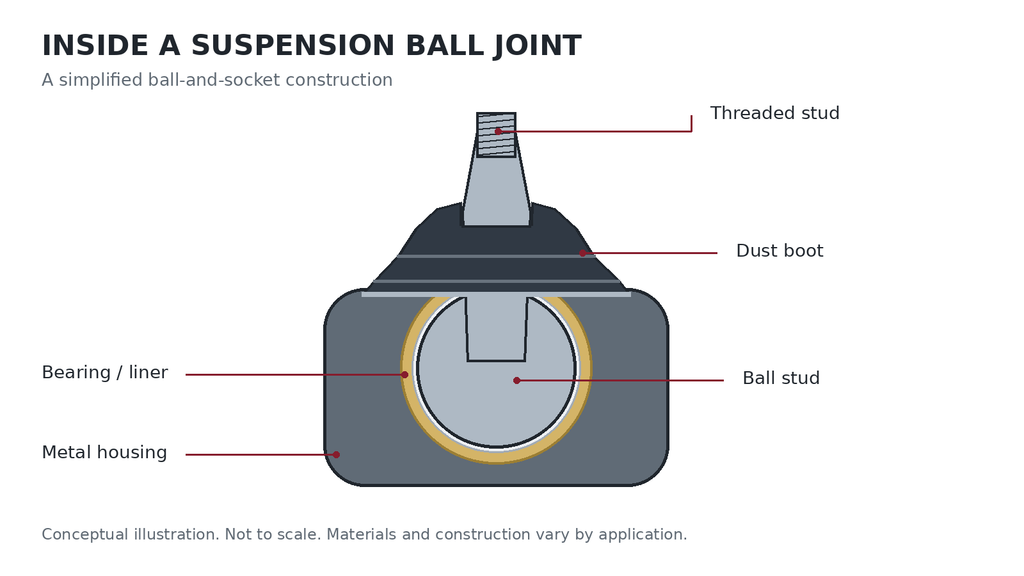
Simplified ball-and-socket construction. Not to scale; actual internal designs vary.
Upper and Lower Ball Joints: What Is the Difference?
Upper and lower describe a joint’s position, rather than a universal load rating. Some suspension layouts use both, while others use a lower joint with a strut assembly. The correct arrangement must be checked for the specific vehicle.
A supporting ball joint carries vehicle weight as part of the suspension load path. A guiding or follower joint primarily locates the wheel and transmits other operating forces. A lower ball joint is not automatically the weight-carrying joint: its function depends on the suspension layout.
Common Mounting and Lubrication Designs
Bolt-on: secured through a flange with application-specific fasteners.
Press-in: retained by an interference fit; some designs also use a retaining ring.
Integrated: supplied as part of a control arm assembly when the joint is not separately serviceable.
Sealed or greaseable: some joints are factory-sealed; others require lubrication as specified by the part manufacturer. Neither type is universally better for every application.
Common Symptoms of a Bad Ball Joint
Ball joint wear can develop gradually. The following signs warrant a suspension inspection, but none confirms the diagnosis on its own.
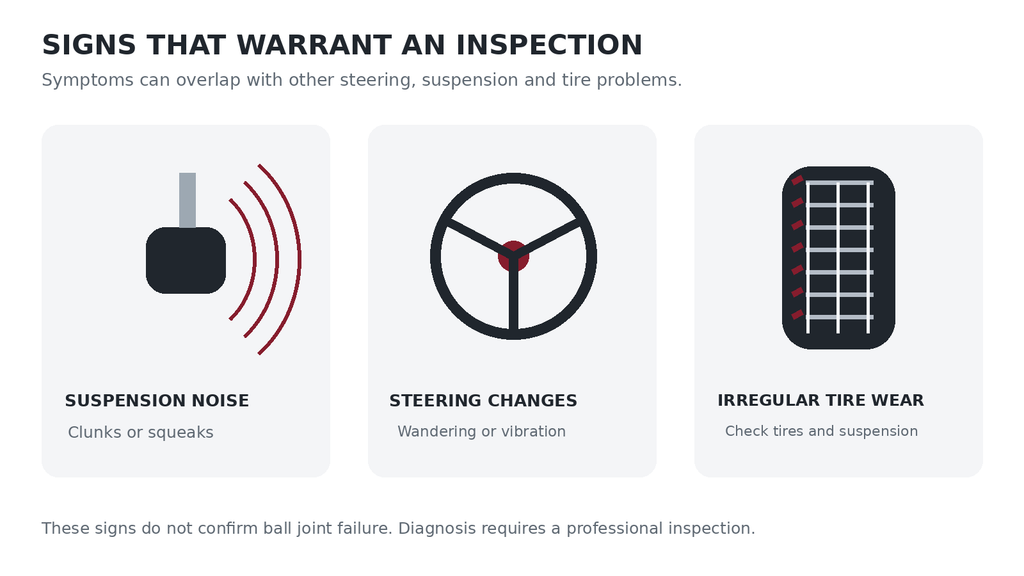
These symptoms can have several causes. A technician must identify the affected component.
1. Clunking or Squeaking
A worn joint may make a clunk over bumps or during cornering. Squeaking can also occur when lubrication or sealing deteriorates. Stabilizer links, bushings and other components can produce similar sounds.
2. Loose, Stiff or Wandering Steering
Changes in steering feel, wandering or vibration may indicate suspension wear. Tire condition, alignment, steering parts and wheel bearings also need consideration.
3. Irregular Tire Wear
An unusual wear pattern may accompany worn suspension components. Inspect the tires and suspension together rather than treating tire wear alone as proof of a defective ball joint.
4. Boot Damage or Abnormal Joint Movement
A split boot, contamination or excessive measured movement calls for closer assessment. Inspection position, applied load and acceptable play depend on the design and vehicle service information; there is no single play limit for all ball joints.
Why Do Ball Joints Wear Out?
Repeated movement gradually wears the joint’s contact surfaces. Water, grit and road salt can accelerate deterioration if protection is compromised. Road impacts, unsuitable parts and installation damage can also contribute. Service life varies with the application and operating conditions, so a universal replacement mileage is misleading.
Severe wear can allow a joint to separate and cause loss of control. Suspected damage needs prompt professional assessment; a vehicle with a joint judged unsafe should not be driven.
How to Choose Replacement Ball Joints
For importers, wholesalers and repair businesses, a clear purchasing specification helps reduce incorrect orders and makes incoming inspection more consistent. Use the following checklist when comparing aftermarket ball joints.
Confirm the OE Reference and Vehicle Application
Provide the OE number together with make, model, production year and chassis details. Include the VIN when needed to resolve variants. Confirm front or rear, upper or lower, and left or right fitment. A model name alone may cover several suspension configurations.
Check the Mounting Interface
Compare the specified taper, thread, mounting-hole pattern, housing dimensions and retention method. Similar-looking parts may have different interfaces. Use a verified catalog or dimensional drawing rather than relying on a photograph.
Agree on the Quality Evidence
Ask what dimensional checks, articulation or rotational torque checks, retention tests, durability tests and corrosion assessments apply to the quoted item. Request the relevant method, acceptance criteria and report where available. A claimed test result for one part does not establish the performance of every item in a supplier’s range.
Inspect Samples and Define Traceability
Approve representative samples before a larger order. Review fitment information, boot condition, finish, supplied hardware and labeling. Agree how part numbers, production batches and inspection records will be identified so that any later issue can be traced.
Confirm the Complete Commercial Specification
State quantities by OE number, required accessories, neutral or branded packaging, carton marking, destination and requested delivery date. Compare quotations on the same basis, including packing and trade terms. Confirm MOQ and lead time for each item rather than assuming one rule applies to the whole order.
Ball Joint Replacement: Key Service Points
Replacement procedures vary by vehicle. A qualified technician should follow the vehicle manufacturer’s instructions for support points, removal tools, joint seating, fasteners and tightening torque. Protect the boot during installation, inspect the control arm and related components, and check wheel alignment as specified after the repair. A general buying guide cannot replace an application-specific service procedure.
Frequently Asked Questions About Ball Joints
How long do ball joints last?
There is no universal lifespan. Design, road conditions, contamination, installation and maintenance all matter. Follow the vehicle’s inspection guidance and replace a joint when its condition or measured wear requires it.
Can I replace only the ball joint?
Sometimes. A separately serviceable joint may be replaced if the associated arm and mounting area remain suitable. Other applications require a complete control arm assembly. Check the catalog and service information before ordering.
Do ball joints need grease?
They need lubrication, but not every joint permits servicing. Lubricate a greaseable joint only with the specified lubricant and procedure. Do not drill or modify a sealed joint to add grease.
Are ball joints and tie rod ends the same?
No. A suspension ball joint provides a pivot in the suspension linkage; a tie rod end transmits steering movement. Their application, mounting and part numbers must be matched separately.
Source Aftermarket Ball Joints from TopShine
TopShine supplies automotive suspension parts, including ball joints, control arms, tie rod ends and bushings. Importers, distributors and parts businesses can request an application-based quotation and discuss packaging requirements.
Send your OE list, vehicle applications, quantity per item, destination country and packaging needs. Our team can check availability, fitment information, MOQ and lead time for your requested products.
Request a ball joint quotation: WhatsApp +86 18070095538 | sales@topshineparts.com | www.topshineparts.com