


Every vehicle owner knows this subtle truth: shock absorbers define your driving experience. They do more than smooth out bumpy roads—they stabilize cornering, shorten braking distances, protect chassis parts, and ensure all-season driving safety. Yet countless drivers make costly mistakes: buying universal shocks, mixing up RWD/4WD parts, or mismatching standard and heavy-duty suspension components.
For Mercedes passenger cars, Smart microcars, and Mercedes-Benz commercial vehicles (Vito, Viano, Sprinter), shock absorber fitment is100% vehicle-specific. There is no “one-size-fits-all” solution. In this guide, we break down how to identify, match, and replace OEM-standard shock absorbers, common pitfalls to avoid, and why precise OE number matching is the gold standard for aftermarket replacement.
Why Shock Absorber Fitment Accuracy Matters
Worn-out shocks cause far more discomfort than a shaky ride. Faded damping leads to excessive body roll, uneven tire wear, poor road grip on wet pavement, and even accelerated damage to springs, control arms, and bushings. For commercial vehicles that carry heavy loads or log high mileage, incorrect shock fitment will drastically reduce service life and increase maintenance costs.
Generic aftermarket shocks may look identical externally, but they differ hugely in damping force, load rating, mounting dimensions, and electronic compatibility. This is why professional garages and experienced enthusiasts always prioritize OE part number verification over visual similarity.
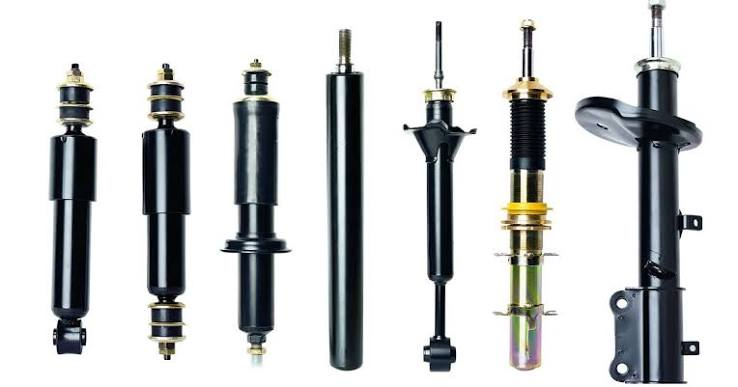
Core Fitment Rules for Mercedes Shock Absorbers
Mercedes suspension systems are strictly categorized by chassis code, drive type, and suspension configuration. Below are the three non-negotiable rules for perfect replacement:
1. Chassis Code Is the Primary Standard
Each Mercedes model generation uses exclusive shock absorber series. For example, W210 (1995–2002 E-Class), W211 (2002–2009 E-Class), and W212 (2009–2016 E-Class) have completely non-interchangeable front and rear shocks. Even similar body styles cannot share parts across generations.
2. RWD vs 4MATIC 4WD Strict Separation
Nearly all Mercedes passenger car shocks areonly compatible with rear-wheel-drive models. 4MATIC all-wheel-drive versions adopt dedicated suspension structures with unique OE numbers. Mixing RWD shocks on 4WD vehicles will cause abnormal vibration, suspension deviation, and safety hazards.
3. Standard Suspension ≠ ADS Adaptive Suspension
Ordinary hydraulic/pneumatic shocks cannot replace ADS adaptive electronic damping shocks, and vice versa. Electronic suspension systems rely on matched sensor parameters and damping programs—wrong parts will trigger dashboard error codes and disable suspension adjustment functions.
Classic Mercedes & Smart Shock Absorber Fitment Cases
Based on mainstream aftermarket replacement demands, we sorted high-frequency OE shock numbers and their exact applicable models to help you quickly confirm compatibility:
Mercedes E-Class Series (W210 / W211 / W212)
W210 E-Class (1995–2002): OE 2103200230 front shocks, fit for all RWD E200–E55 AMG models, excludes 4MATIC and S210 wagon versions.
W211 E-Class & S211 Wagon (2002–2009): OE 2113232100 / 2113232200 front shocks and 2113260000 rear shocks cover all RWD standard suspension models, compatible with CLS C219, not suitable for ADS or 4WD variants.
W212 E-Class (2009–2016): OE 2123231700 front shocks for RWD sedan and touring models, exclusive of 4MATIC and adaptive suspension configurations.
Compact Car Series (W176 / W246 / C117)
OE 2463232900 (front left) / 2463233000 (front right) shocks fit Mercedes A-Class W176, B-Class W246, CLA C117/X117 (2011–2018). Strictly left/right separated, not compatible with GLA W156 or new-generation W177/W247 models.
Smart Fortwo W451 (2007–2014)
Front shocks: A4513202531 (left) / A4513202631 (right); Rear universal shock: 4513202331. Fully compatible with coupe, cabrio, and Brabus editions, excludes W450/W453 generations.
Commercial Vehicle Shock Guide: Vito, Viano & Sprinter
Mercedes commercial vehicles have higher load-bearing requirements, divided into standard chassis and heavy-duty HD chassis—the most confusing point for aftermarket replacement.
Vito / Viano W638 & W639
W638 (1996–2003): Front shock 6383200613, rear shock 6383261100, universal for all standard-load models.
W639 (2003–2014): Front shock 6393202713, rear shock 6393260900, suitable for standard chassis; invalid for raised heavy-duty chassis and air suspension versions.
Sprinter W901-W904 / W906
Old Sprinter W901-W904: 9013200230 standard front shocks, 9043200730 heavy-duty front shocks for high-load scenarios.
New Sprinter W906 (2006–2018): 9063200031 standard rear shocks, 9063205530 HD front shocks, also compatible with VW Crafter homologous models.
3 Common Aftermarket Replacement Mistakes to Avoid
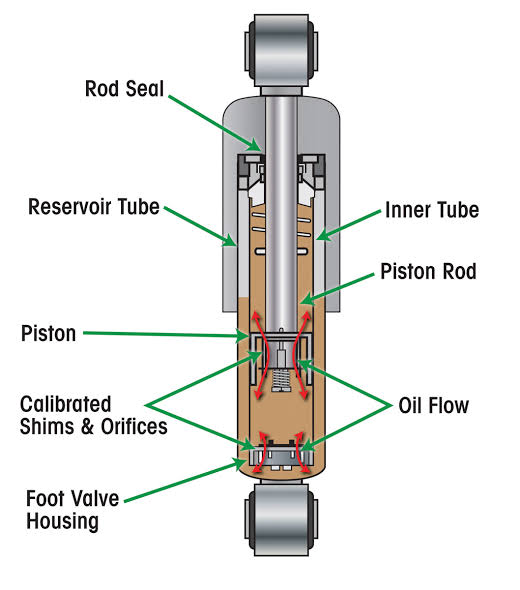
1. Judging compatibility by appearance only Many shocks share identical shapes but differ in internal damping and load parameters. Always verify via OE numbers instead of visual comparison.
2. Mixing standard and heavy-duty shocks Light-load chassis fitted with HD shocks causes stiff ride and chassis stress; heavy-load vehicles with standard shocks suffer rapid fatigue and oil leakage.
3. Ignoring drive and suspension types RWD/4WD and ordinary/ADS adaptive suspensions are not interchangeable. Wrong installation triggers faults and hidden safety risks.
Final Thoughts
Auto suspension maintenance is never about “cheap replacement”—it’s about accurate matching and reliable quality. For Mercedes passenger cars, Smart microcars, and Mercedes commercial vehicles, OE-number-matched shock absorbers ensure original driving texture, long service life, and full driving safety.