


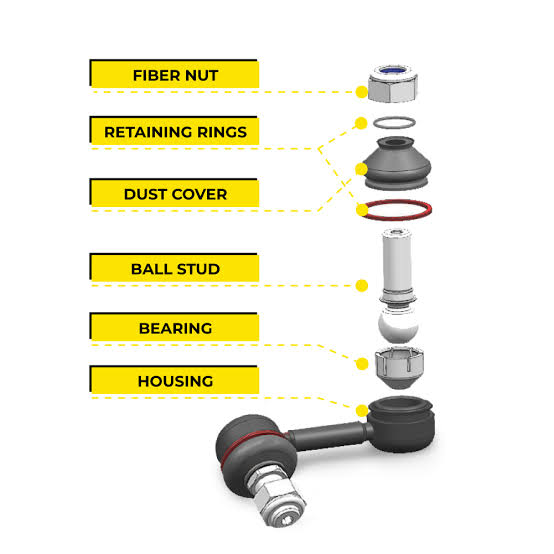
When you’re cruising down the road, enjoying a smooth cornering experience and a comfortable ride, you might not realize that a quiet “little guy” beneath your chassis is working its heart out. It’s the Stabilizer Link (also commonly known as a Sway Bar Link or anti-roll bar link).
In today’s post, we’re going to give this unsung hero of your car’s suspension system the spotlight it deserves. Let’s dive into why it matters, when it needs to be replaced, and what to look out for.
What Is a Stabilizer Link and How Does It Work?
Simply put, the stabilizer link is the crucial bridge that connects the sway bar (stabilizer bar) to the wheel suspension components (such as the struts or control arms).
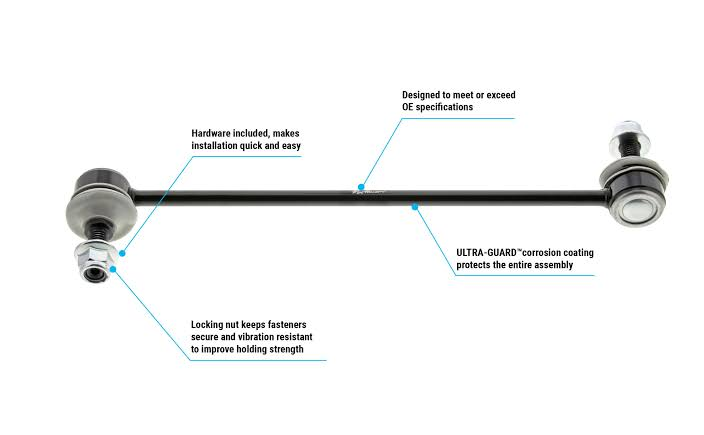
⚙️ How it works:
When you drive straight on a smooth, flat road, the suspension on both sides experiences equal force, and the links bear almost no torsional stress. However, the moment you take a sharp turn at high speed or hit a pothole with only one wheel:
- Centrifugal force causes the car body to lean (body roll).
- The outer suspension compresses while the inner suspension extends.
- The stabilizer links instantly transfer these opposing forces to the sway bar.
- The sway bar twists, utilizing its own torsional stiffness to pull the inner wheel up and push the outer wheel down—forcefully suppressing body roll and keeping all four tires firmly planted on the tarmac.
4 Warning Signs of a Failing Stabilizer Link
As a wear-and-tear item on your chassis, the stabilizer link relies on rubber dust boots at both ends to seal in grease and keep out contaminants. Once these boots crack, moisture and road grit get in, quickly leading to excessive play and wear.
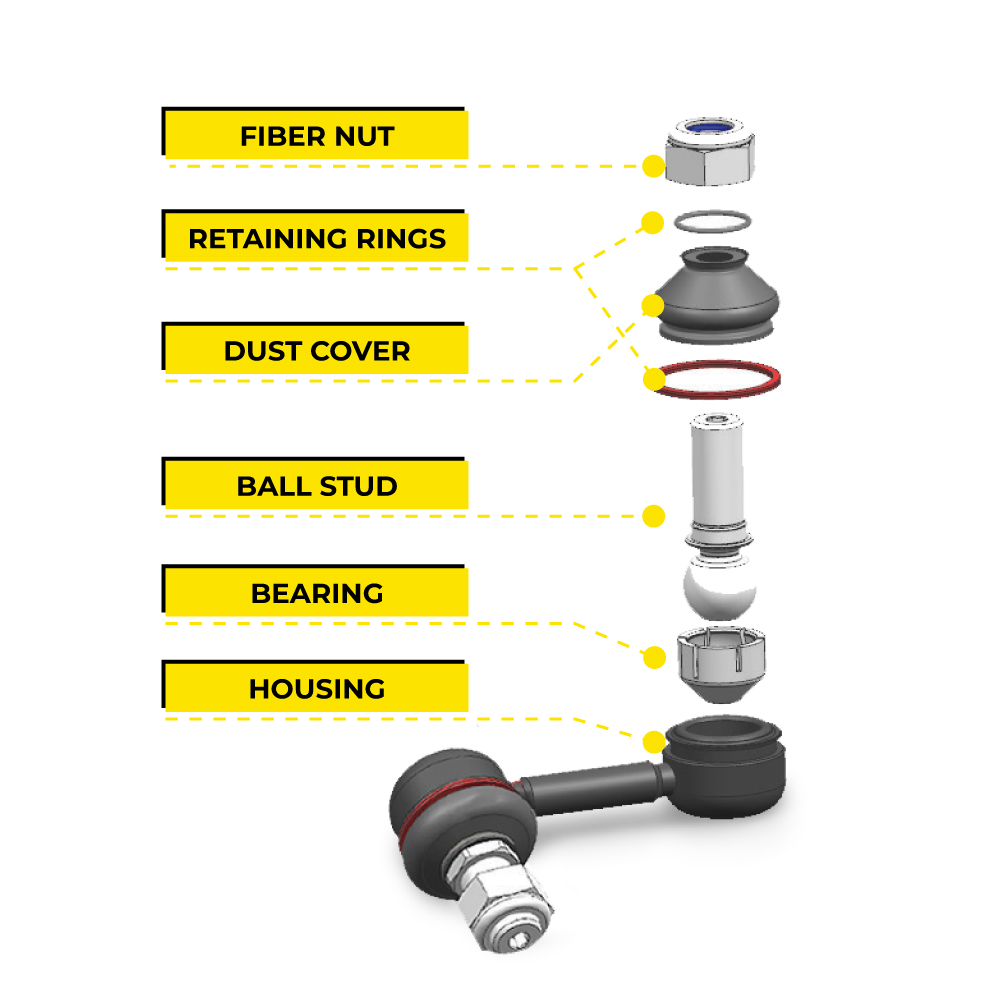
If your vehicle exhibits any of the following symptoms, it’s likely time for a replacement:
- 🔊 Frequent Clunking or Knocking: You hear a distinct “tapping” or dull “thumping” sound from the front end when driving over speed bumps, rough roads, or during sharp turns.
- Loose or Lazy Steering: The steering wheel feels less precise than it used to. The car sways excessively when cornering, giving you a floaty, “boat-like” sensation.
- Increased Body Roll: Bends that you used to take confidently at 30-40 mph now make the car lean heavily, noticeably draining your driving confidence.
- Visible Physical Damage: If you get the car up on a lift, you can visibly see that the rubber dust boots are cracked, leaking grease, or the link rod itself is bent or deformed.
Pro-Tips to Extend the Lifespan of Your Stabilizer Links
While stabilizer links are consumable parts, good driving habits can significantly stretch their lifespan:
- Slow Down for Road Imperfections: Avoid hitting speed bumps, curbs, or massive potholes at high speeds with just one wheel. This uneven, high-velocity impact is brutal on the links.
- Inspect the Chassis Regularly: During your routine oil changes, ask your mechanic to give the stabilizer links a quick tug to check for play and inspect the rubber boots for signs of cracking.
The Bottom Line: Small Part, Big Safety
Stabilizer links might be inexpensive and small, but they directly impact your handling experience and emergency evasive safety. Addressing strange noises early not only restores that crisp, “new car” handling feel but also prevents a loss of vehicle control in extreme driving scenarios.
If your car has been feeling a little “mushy” around the corners lately, checking your stabilizer links is the perfect place to start!